Ergon Inc.
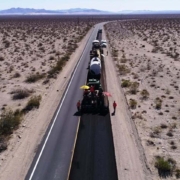
According to the Asphalt Pavement Alliance, asphalt is recycled at a greater rate than any other material in the United States. Treating pavements with recycled asphalt is less costly than paving or repaving with new asphalt, and is a more environmentally friendly approach.
Environmental Impact
Recycled asphalt processes result in reduced emissions because they require less trucking and less energy during construction and have a smaller carbon footprint due to the fact that aggregate is reused. Of the recycling methods available, Cold In-Place Recycling (CIR) has perhaps the greatest environmental impact, as it can address cracking and restore pavement without the use of heat. This is a significant benefit for both the environment and construction crews because it reduces pollution and exposure to fumes.
The CIR Process
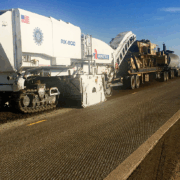
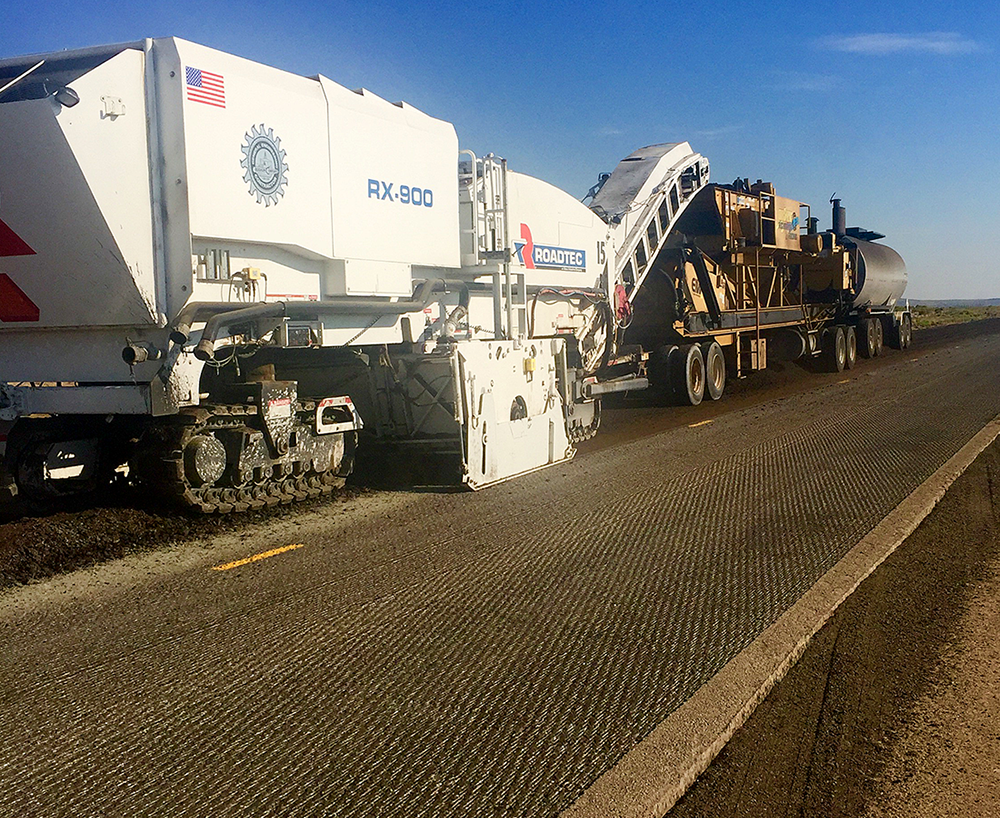
During the CIR process, existing pavement is milled at depths ranging from three to five inches. This material is crushed, mixed with a recycling emulsion and other additives as needed, replaced and then compacted.
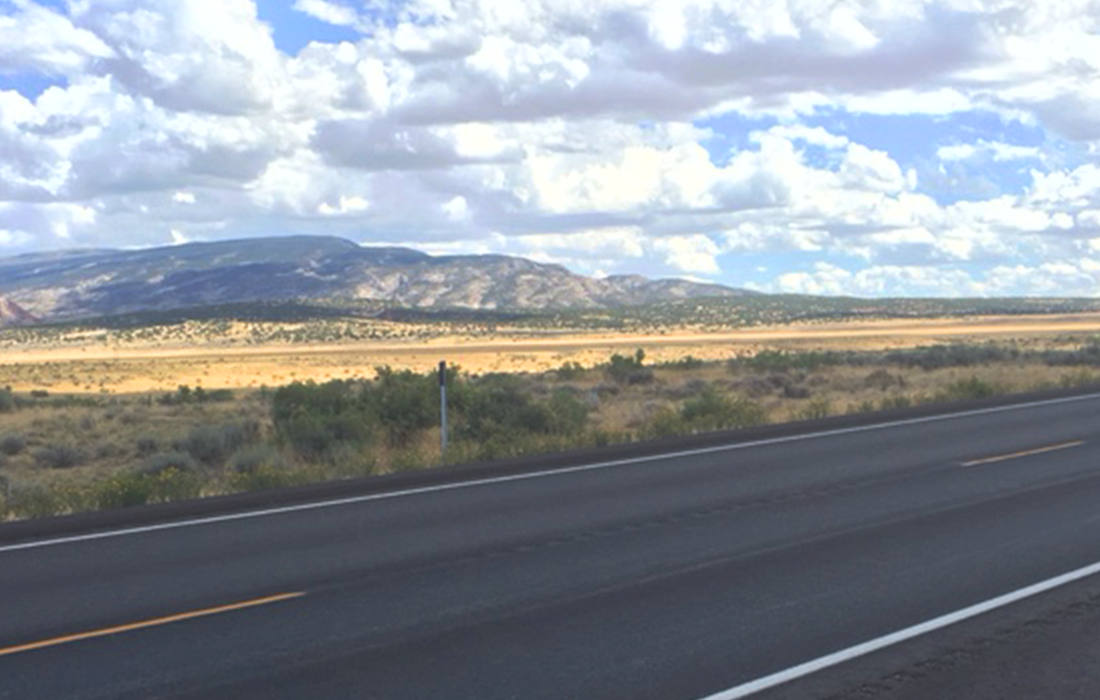
This process allows for an energy efficient, cost-effective and timely solution for renewing your pavements. According to pavementineractive.org, CIR treatments are most effective when applied in sunny, dry conditions that allow the additives to set properly, which made it a fitting solution to treat an aged section of State Route 247 in San Bernardino, California an area known for its dry climate. Following are details about this project as featured in June 2019 (No. 50) edition of CP2 Center News, a Newsletter of the California Pavement Preservation Center.
CIR in San Bernardino County
By: Marco Estrada, PRS
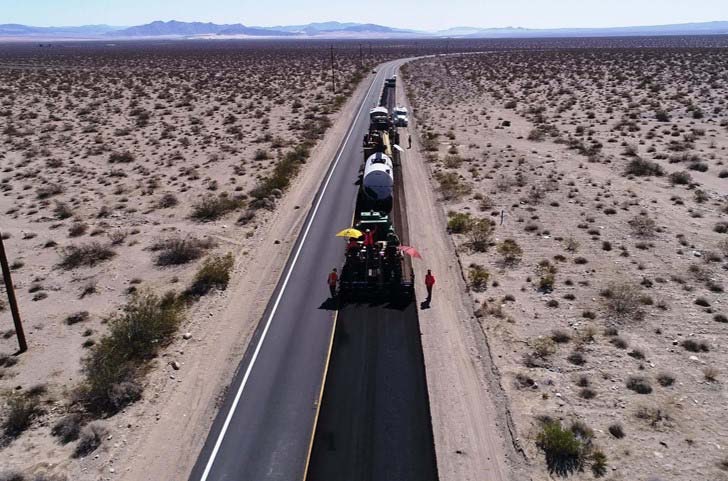
On State Route 247 near Lucerne Valley in San Bernardino County, Pavement Recycling Systems (PRS) performed Cold In-place Recycling (CIR) on over 230,000 SY of old asphalt pavement. The distresses in the existing pavement were block cracking and alligator cracking, but the underlying base showed no signs of failure, which made this the perfect candidate for CIR. The project required 3.5 of CIR with a 2.5 RHMA cap on top. The CIR process has an incredibly small footprint that allows for minimal lane closures and a reduced impact to the regional traffic. Traffic was fully opened at the end of each day and in between the CIR and RHMA processes. Matich Corporation led the project as the Prime Contractor as well as the supplier for the rubberized hot mix asphalt (RHMA) that would overlay the CIR. Ergon Asphalt & Emulsions supplied the emulsion for the CIR process. The emulsion used was a CIR- EE mixed in at a rate of 2.75%.
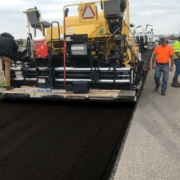
PRS used a Caterpillar PR-1000 milling machine as part of their CIR train of equipment. The cold, wet CIR mix was deposited in a windrow for placing with a Caterpillar AP-1055 paving machine. Rolling was done with a 25-ton rubber-tire roller and Caterpillar P380. Overall, the project consisted of 19 days of CIR work and 18 days for the RHMA overlay, both portions were completed fully on-schedule.
Using CIR and recycling all the old asphalt pavement in-place not just cuts out the need to produce virgin asphalt by reusing materials in- place, it also reduces or eliminates the need for hauling of materials offsite. In total, this project eliminated approximately 4,000 truckloads of material, which greatly reduced traffic and CO2 emissions. This was not the only positive environmental impact provided on this project; the use of RHMA eliminated roughly 70,000 tires from landfills.
Mike Ristic, the Maintenance Engineer for Caltrans District 8, is no stranger to the CIR process. He talked about his experiences with the process, 2011 was when we started our first CIR project with SR 62 and US 95. Both projects came out great, as well as every CIR project we have done over the years. Overall, in District 8, we have done over 200 lane miles of CIR and plan to add more lane miles every year. He went on to talk about the benefits of using CIR, stating that, The pavement life that we are getting out of our recycled roads is 15 years or even more. We keep them maintained with seal coating to make sure that we get even more years of performance. Referencing Caltrans goals for sustainability, Mike adds, CIR is great on these projects because we recycle our existing pavement resources and eliminate the hauling of materials to asphalt plants that are typically 50 or more miles away. All results from CIR are very positive. The process is quicker (when compared to remove and replace methods) on the projects that we selected, and the final surface rides very smooth.
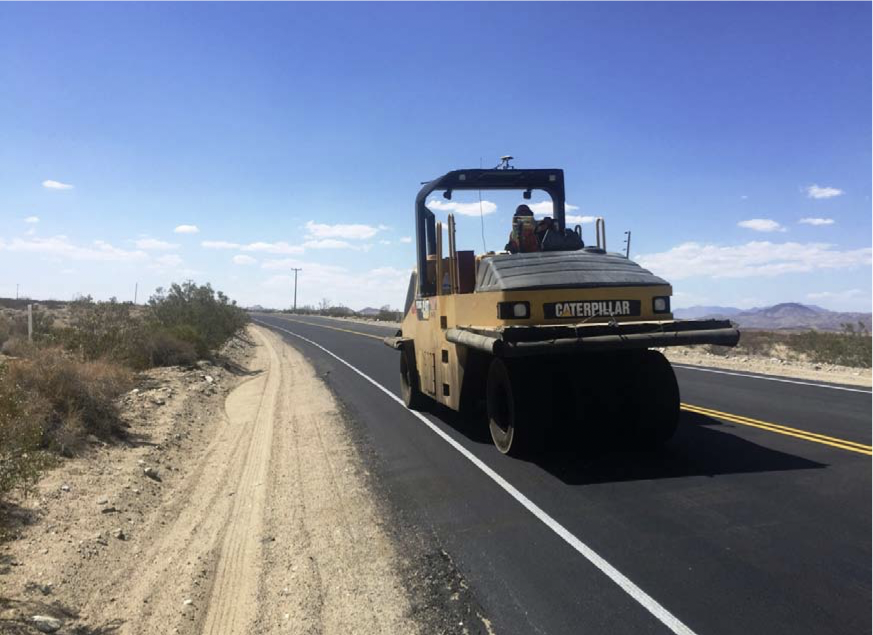
As is with all Caltrans projects, there was a smoothness requirement for a Mean Roughness Index (MRI) of 60 or lower using IRI measurements. The paving operation was highly efficient utilizing best paving practices and grade controls on paving equipment and the final pavement surface obtained the required smoothness, exceeding the requirement with minimal corrections needed. The project also required the use of Intelligent Compaction (IC), to achieve a longer life by achieving more uniform and better overall compaction of the CIR and RHMA. IC Rollers utilize GPS mapping, which allows the operator to view the precise location of where compaction has been completed or areas that require further rolling. This makes sure that no areas of the mat are missed during the compaction process, which ensures adequate support, stability and strength leading to a long-lasting road.